

Key Takeaways
- Dry eye disease happens when your eyes make too few tears or your tears dry up too quickly.
- Stinging, grittiness, blurry vision, redness, and watery eyes can all point to dry eye disease.
- Wind, long screen time, some medications, contact lens wear, and certain health conditions can play a role.
- Early care can help protect the surface of your eye and your vision.
- Treatment can include at-home relief and in-office care based on the cause and severity.
You blink, rub, and blink again, but your eyes still feel full of sand by mid-afternoon. Maybe the words on your screen blur for a moment and then clear up. At Woodstock Vision Care, our team often hears about these small, nagging moments from patients, and they can point to one condition.
Stinging, gritty, or burning eyes, blurry vision that comes and goes, redness that builds through the day, and watery eyes are all signs of dry eye disease worth bringing to your optometrist. Dry eye treatment can help you find relief once our team knows what’s behind your symptoms.
What Is Dry Eye Disease?
Dry eye disease happens when your eyes make too few tears, or when your tears dry up too quickly. Either way, your eyes can feel uncomfortable.
This condition can affect both your comfort and your vision during everyday tasks like reading, driving, or working on a computer.
Common Dry Eye Symptoms to Watch For
How Your Eyes May Feel
Dry eye disease often shows up first as a feeling rather than something you can see.
Pay attention if you notice any of these sensations:
- Your eyes sting, scratch, or feel gritty.
- You notice a sandy or burning feeling in your eye.
- It feels like something is stuck in your eye, even when nothing is there.
Changes You May Notice
Other signs are easier to spot in the mirror or while you work.
Watch for these changes:
- Your vision turns blurry, or it comes and goes while you read or drive.
- Redness builds as the day goes on.
- Your eyes water with extra tears.
Watery eyes can seem like the opposite of dryness. However, extra tears are one of the signs on this list, so they’re worth mentioning at your next visit.
What Contributes to Dry Eye Disease?
Everyday Factors
Your daily routine can play a part. A windy walk, a long day staring at spreadsheets, or a night of poor sleep can leave your eyes feeling dry and tired.
Some medications can also play a role, so it helps to keep a list of what you take.
Health and Eye Factors
Some factors relate to your overall health or the condition of your eyes. These can include the following:
- Eyelid problems can play a role.
- Recent laser eye surgery can contribute.
- Long-term contact lens wear can be a factor.
- Health conditions like Sjögren’s syndrome, lupus, or rheumatoid arthritis can be linked to dry eye disease.
When to Book Eye Care in Woodstock, ON

Why Early Care Helps
A dry afternoon here and there may pass on its own. If your symptoms keep coming back, stick around, or worsen, it’s a good time to book a visit.
Untreated dry eye disease may harm the surface of your eye, and your vision can decline over time. Booking early lets your optometrist start a plan to help manage your symptoms.
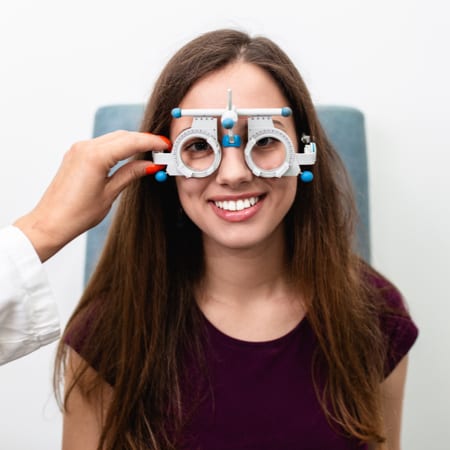
What Happens at Your Eye Exam
Your optometrist looks for clues about what’s behind your discomfort. During your exam, you can expect your eye doctor to assess:
- How many tears your eyes make.
- The quality of your tear film.
- A chat about your medications, smoking habits, and your surroundings at home and work.
Open answers about your screen habits or your workspace can help your optometrist choose a treatment that fits your daily life.
Dry Eye Treatment Options and Comfort Tips
At-Home Relief
Small changes at home can help you feel more comfortable between visits. Your optometrist may suggest artificial tears, eye drops, or ointments. A warm compress followed by a gentle eyelid massage can feel soothing at the end of a long day.
Your surroundings matter too. A humidifier can help when indoor air feels dry, and sunglasses can shield your eyes from wind on a breezy fall afternoon.
In-Office Care at Woodstock Vision Care
For symptoms that need more support, our team can offer in-office options.
Depending on your needs, these may include the following:
- Prescription eye drops can help manage your symptoms.
- Scleral lenses are a type of contact lens your optometrist may recommend.
- Tiny plugs can help your eyes keep more tears.
Each dry eye treatment plan is based on the cause and severity of your symptoms, so your care fits what your eyes need.
Find Dry Eye Relief at Woodstock Vision Care
Gritty, red, or blurry eyes can make simple tasks feel harder, but you have options. Woodstock Vision Care offers dry eye treatment along with eye exams for all ages, myopia control for children, contact lens fittings, and an optical boutique with an in-house lab for quick access to new glasses.
If your eyes feel dry, itchy, or tired, book your appointment online today and let our team support your comfort and your vision.