
Changes to the shape of your cornea can shift your vision in ways that glasses or contacts can’t fully correct. Corneal crosslinking is a specialized procedure designed to strengthen the cornea and stop conditions like thinning or bulging from progressing. Catching these changes early through routine exams gives you the best chance of avoiding more complex eye conditions down the road.
The procedure itself is performed by a specialist, but the diagnosis, monitoring, and follow-up care happen with your optometrist. At Woodstock Vision Care, our team can identify the early signs of conditions like keratoconus during a comprehensive eye exam and refer you to the right specialist if crosslinking might be the right next step.
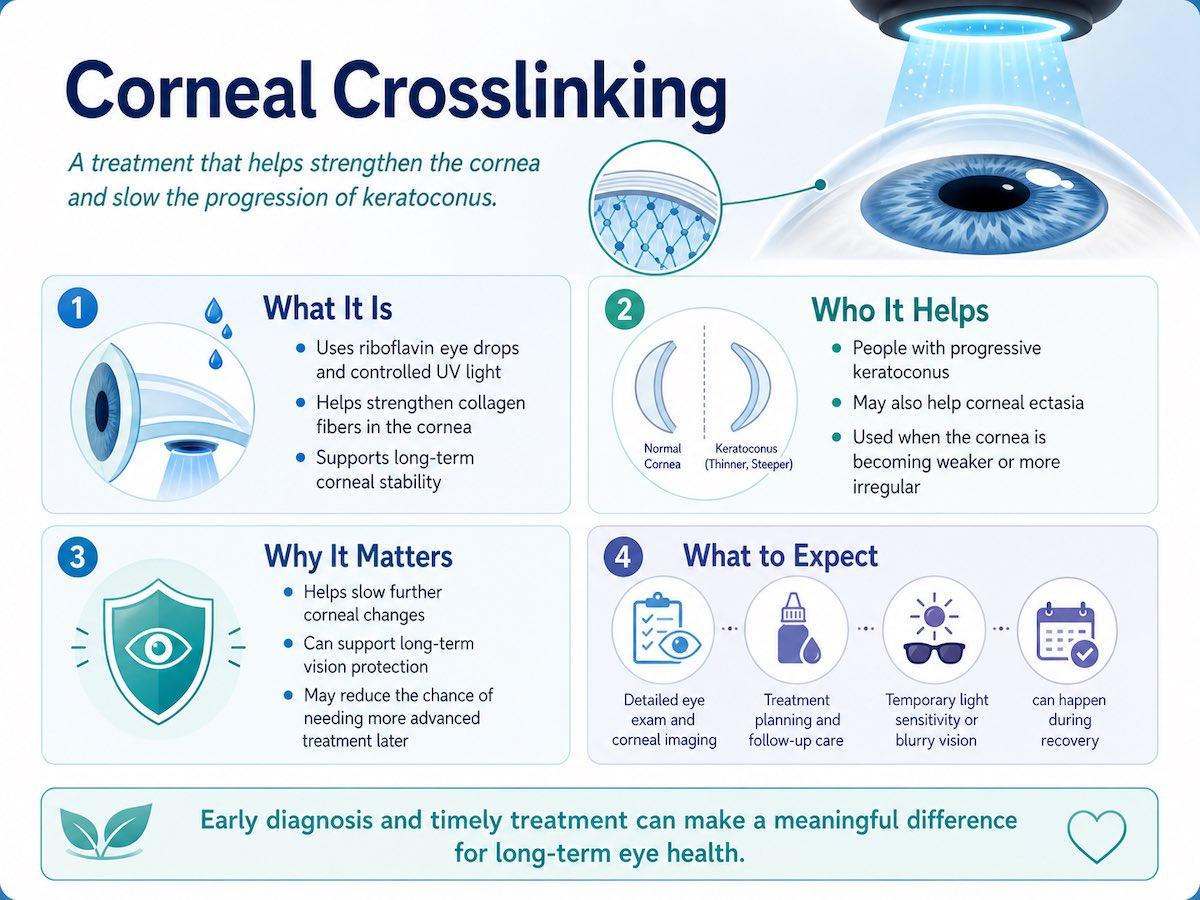
Crosslinking works by applying riboflavin drops to the eye and activating them with UV light. This process forms new collagen bonds that strengthen the cornea, similar to reinforcing a soft material so it holds its shape. The result is a firmer, more stable cornea that may be less likely to continue changing.
Who Corneal Crosslinking Is For
Corneal crosslinking is most often used for keratoconus, a condition where the cornea gradually thins and starts to bulge outward like a cone. This change in shape makes it difficult to see clearly, even with corrective lenses. Crosslinking can help slow that progression significantly when caught at the right stage.
The procedure is also used in cases where the cornea weakens following LASIK surgery. Stabilizing the cornea early in those situations can help protect your long-term vision outcomes.
Who May Not Be a Candidate
Not everyone is a good fit for crosslinking. If your cornea measures thinner than 400 micrometres, the procedure may not be safe to perform. Active eye infections or severe dry eye can also make someone a less suitable candidate.
This is why a thorough evaluation with an optometrist is the right starting point. At Woodstock Vision Care, we can measure your corneal thickness, assess overall eye health, and determine whether crosslinking is worth exploring with a specialist. If you are a strong candidate, we’ll connect you with the right surgical team and stay involved throughout your care.
What to Expect During the Procedure
Crosslinking is performed by a corneal specialist or ophthalmologist in a surgical setting, not at a regular optometry appointment. Knowing the steps ahead of time can help you feel prepared when your referral appointment comes up.
The process starts with numbing drops applied directly to your eye so you stay comfortable throughout. The outer layer of the cornea is then gently removed to allow the riboflavin to absorb properly. Once the cornea is ready, riboflavin drops are applied for roughly 30 minutes while UV light activates the bonding process.
The full appointment typically takes around an hour from start to finish. Afterward, your specialist will place a protective contact lens over the eye to act as a bandage while the surface heals.
Is Corneal Crosslinking Painful?
During the procedure itself, the numbing drops keep discomfort minimal. You may feel some pressure or mild sensitivity to the light, but sharp pain is uncommon.
Afterward, it’s normal to experience mild to moderate soreness, light sensitivity, or a gritty feeling in the eye for a few days. These sensations tend to ease as the surface heals over the first week. Your optometrist can help you manage discomfort during recovery and answer any questions that come up between specialist follow-ups.
Recovery and What to Avoid
Most people return to their regular daily activities within 1 to 2 weeks after the procedure. Your vision may feel a bit blurry in the short term as your eye adjusts, which is a normal part of the process. Full vision stabilization takes longer, often several months, since the new collagen bonds need time to mature and take full effect in the corneal tissue.
Recovery typically involves follow-up appointments with both your specialist and your optometrist. Your specialist monitors how the cornea is healing in the weeks immediately after the procedure, while your optometrist tracks longer-term stability and overall eye health. At Woodstock Vision Care, we work alongside your surgical team to make sure nothing slips through the cracks during recovery.
Protecting the eye during recovery encourages a smooth healing process. Avoid these activities in the weeks following:
- Rubbing your eyes
- Letting water get into your eyes
- Heavy exercise
- Smoky environments
- Eye makeup for at least the first week
Follow your specific aftercare instructions closely to support your recovery. Seek immediate care if you notice sudden or concerning changes to your eye.
How Long Corneal Crosslinking Results Last
It’s worth setting clear expectations about what crosslinking does. The goal is to halt progression, not reverse damage that’s already occurred. Your vision may not dramatically improve right away, but stopping further deterioration is a meaningful outcome on its own.
Results have held for several years in many cases, making this a long-term investment in corneal health. For people with keratoconus, a stable cornea may reduce the likelihood of needing a corneal transplant down the road. That said, “stable” doesn’t mean “set and forget.” Regular monitoring through routine eye exams is what confirms the procedure is holding, and our team at Woodstock Vision Care can track your corneal stability over time, flag any changes early, and stay in touch with your specialist if anything needs further attention.
Protect Your Long-Term Vision
Catching changes to your cornea early is the most effective way to keep your treatment options open. If you’ve noticed shifting vision, increasing nearsightedness or astigmatism, or trouble seeing clearly even with updated lenses, those can be early signs of something worth investigating.
The team at Woodstock Vision Care can evaluate your corneal health, identify whether crosslinking might be the right next step, and connect you with a trusted specialist if a referral is needed. From there, we’ll stay involved in your care to track recovery and long-term stability.
Book an eye exam to get a clear picture of where your vision stands and what comes next.